We have a prehistoric brain, medieval institutions and divine technology. What to do with that?
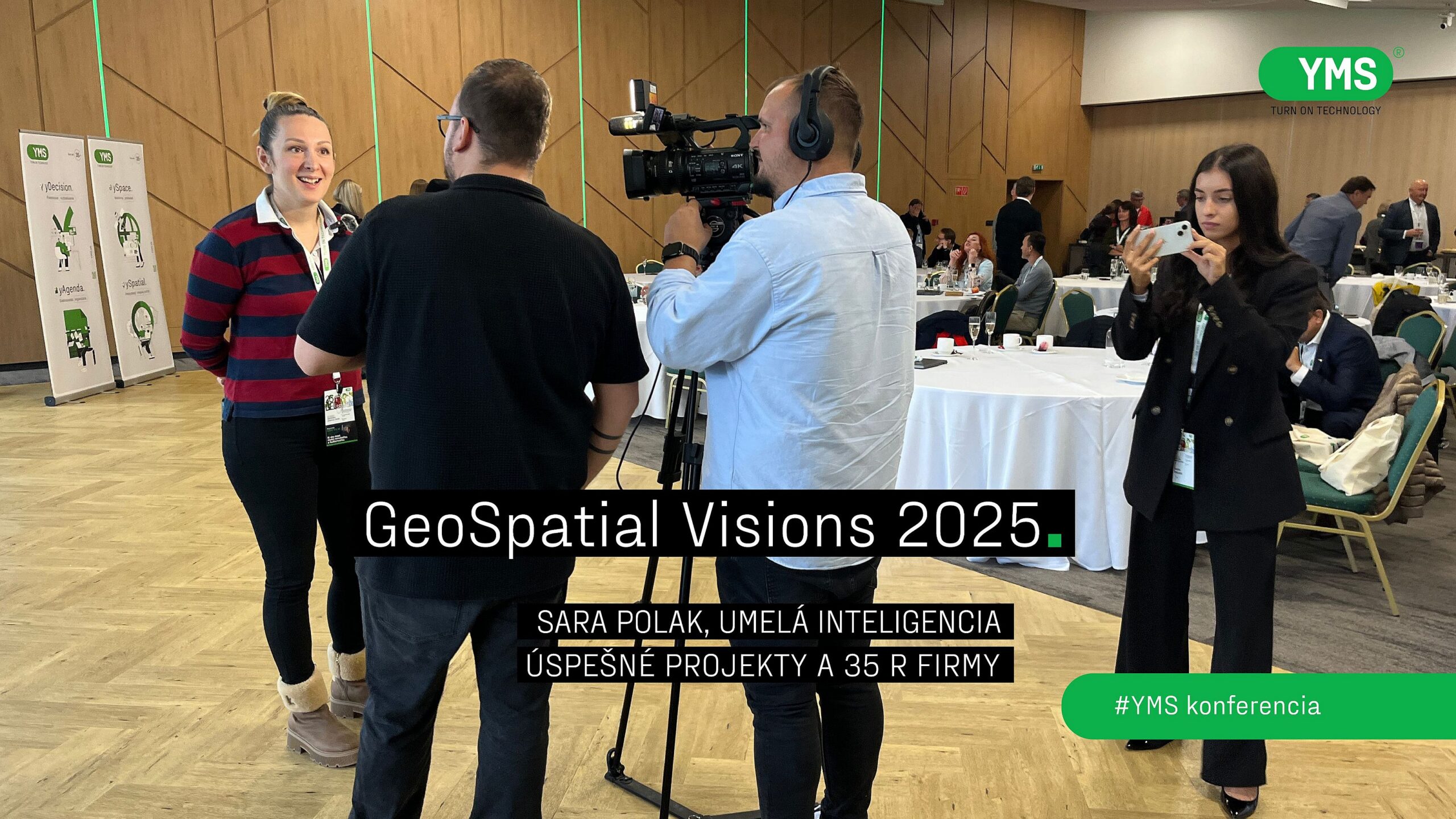
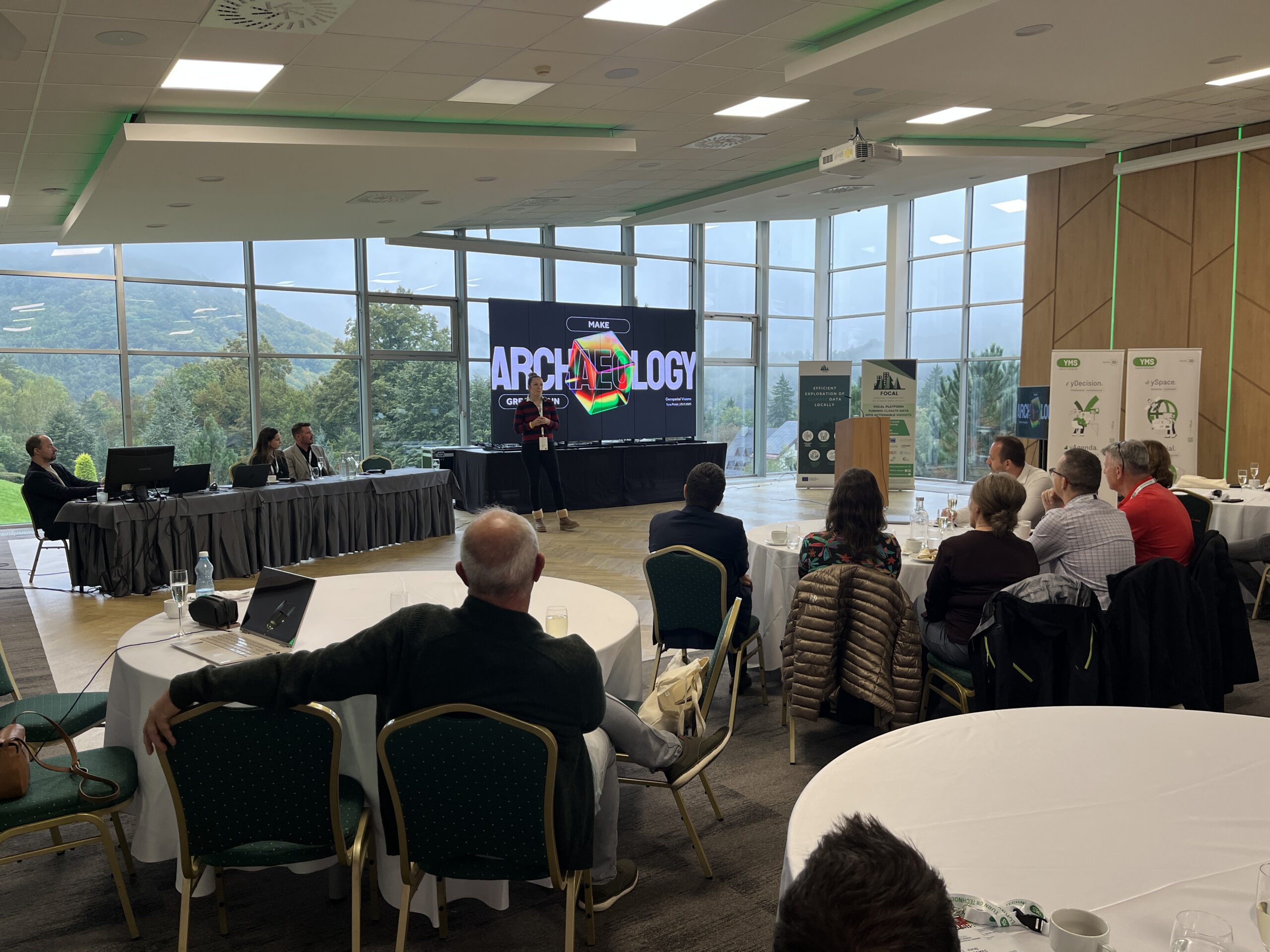
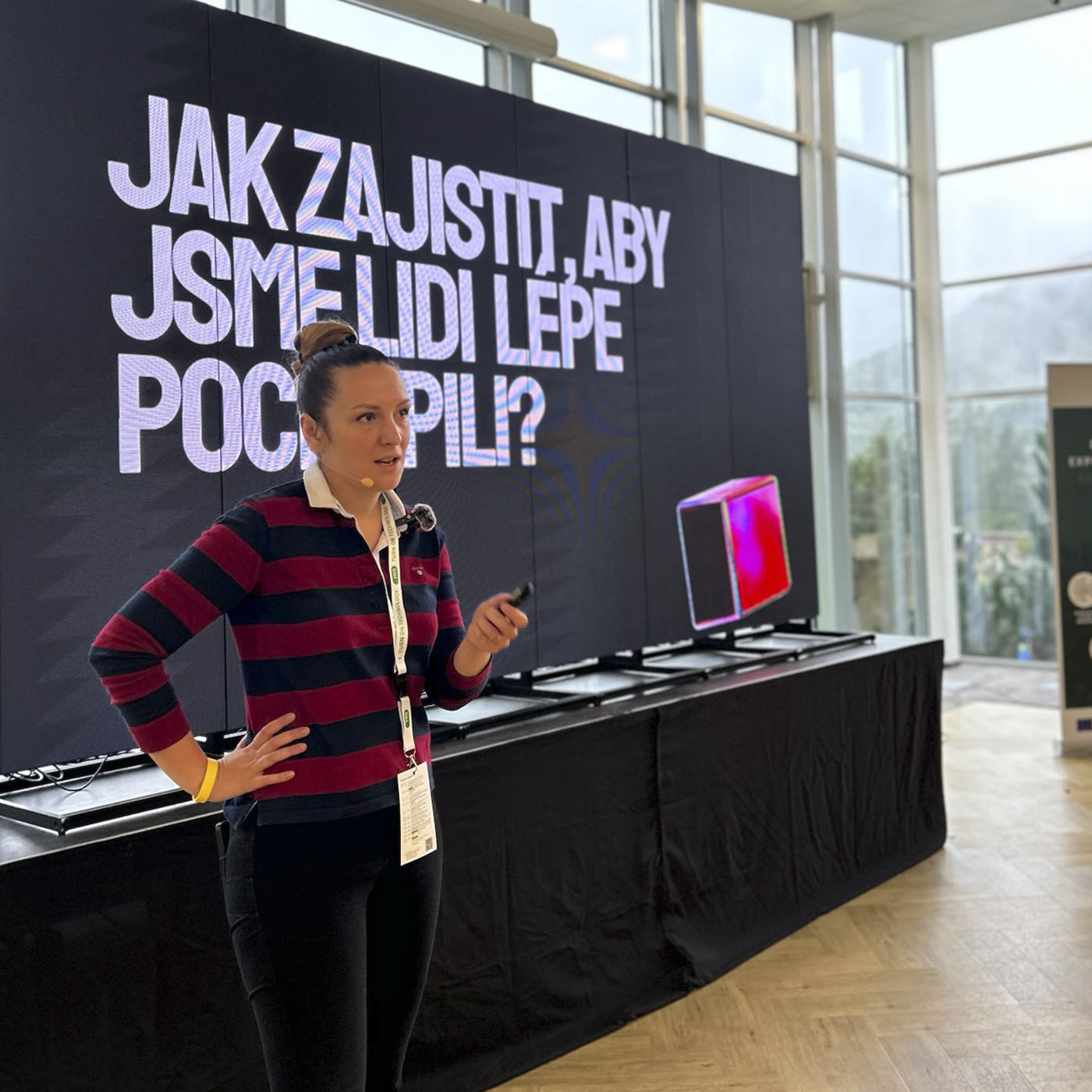
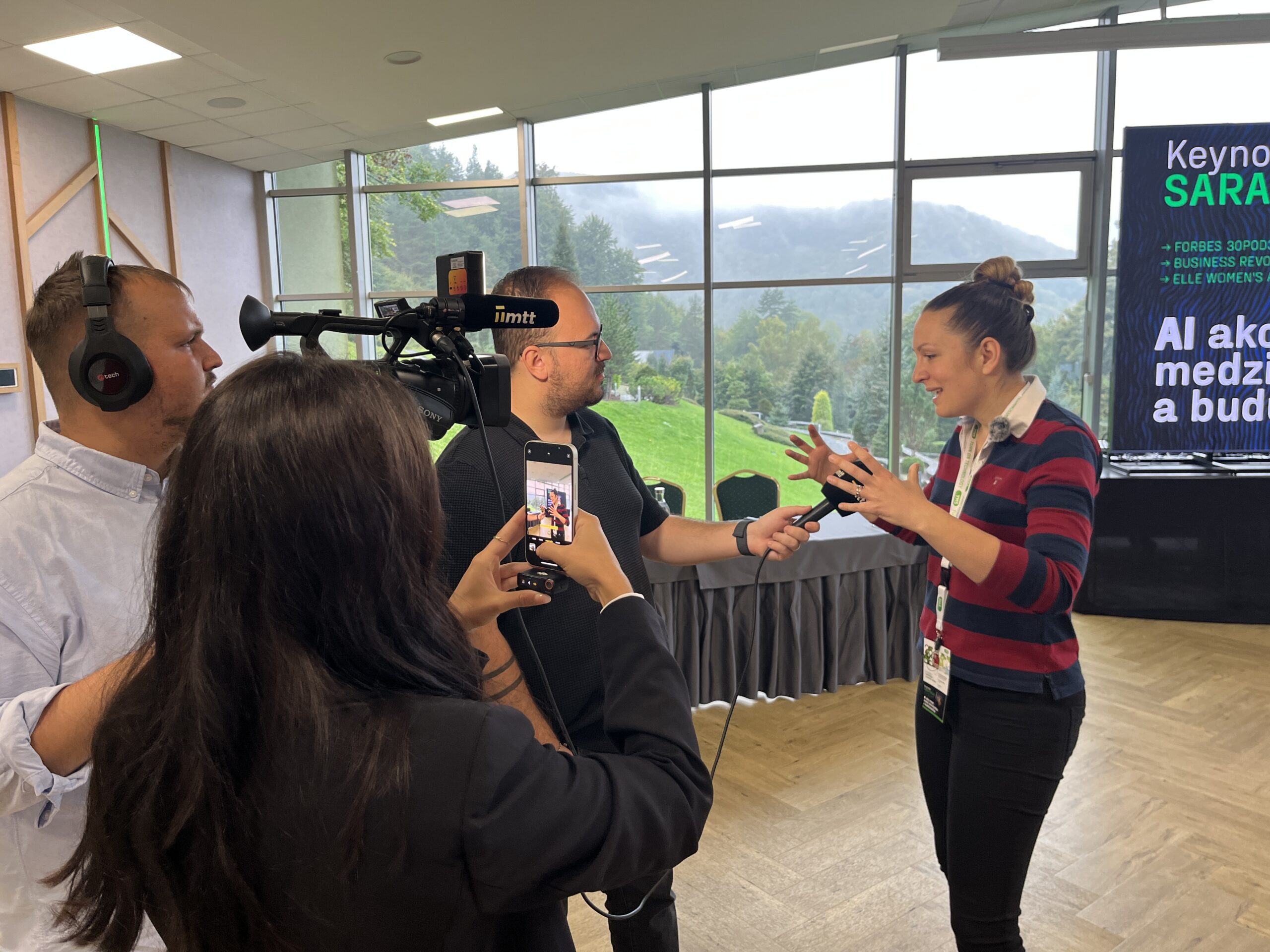
What this meant was explained to us by the main speaker of the 24th edition of the YMS GeoSpatial Visions conference, Sara Polak, an award-winning archaeologist, Oxford-educated interdisciplinary researcher and innovator featured in Czech Forbes 30 Under 30. She studied and explained how technology changed humanity, and how every significant new technology — from fire to artificial intelligence — triggered wonder, fear and unexpected consequences.
Sara’s lecture provoked thought and brought inspiration — exactly what we were looking forward to. Therefore, we tried to summarize her message as best as possible. Here you go, starring Sara Polak:
Artificial intelligence today moves the world.
We heard terms like AI transformation, change management or Industry 4.0 everywhere. Companies wanted to innovate, deploy algorithms and be “digital.” But it often turned out that instead of data warehouses they had archives full of paper folders. How was a “smart factory” supposed to arise in such an environment?
At first glance, it seemed that archaeology and anthropology had nothing to do with it. In reality, they helped us understand how people function — and thus how technology influenced society.
Paleolithic Brains in a Digital World
Ninety percent of human history was lived as hunters and gatherers. Our brains were still tuned to small groups, simple signals and direct contact. Yet in the last five thousand years the world changed dramatically — writing was created, the printing press was invented, the industrial revolution came, and today we lived in the digital era.
As biologist E. O. Wilson aptly noted: “Modern humans have Paleolithic emotions, medieval institutions and divine technology.” That was the core of the problem. Technology developed faster than we did. Therefore archaeology was not a “useless science” — it taught us to read history, find parallels and understand why people behaved the way they did.
Maps, ADHD and Blueberry Hunters
People never had a perfect sense of space. In the Paleolithic era instincts and different ways of thinking helped us. What we now called ADHD could once have been an advantage: while focused berry gatherers emptied one bush, “distracted” individuals covered a large territory and ensured a varied food supply.
With the growth of civilizations it became necessary to create maps — and they became tools that allowed us to explore the world and organize society. Today we combined them with LiDAR imaging and 3D models to discover long-lost cities.
Technology and Social Change
Every major technological innovation changed not only industry, but also society:
Printing press → Protestantism and mass literacy.
Steam engines → urbanization, unions and new political ideologies.
Internet → globalization and social networks.
Artificial intelligence → new ways of working, questions of universal income and ethics.
Technology could not be separated from its impact on people. And this was exactly what needed to be observed even today.
Artificial Intelligence in Practice: Stories from the Field
Industry: An algorithm was supposed to monitor machine vibrations, but it detected the radio that a worker was playing. The result? “False alarms” and an angry director.
Culture: The National Gallery in London blamed a drop in visitors on Brexit. The analysis showed the real problem was the rise of Airbnb — people were staying far from the city center.
Healthcare: If nurses spent less time on administration and more with patients, it would save thousands of lives annually. AI could help shift that balance.
Waste management in Prague: Algorithms for waste collection had to account for the fact that some containers were used as shelter by people without homes.
Vineyards: AI could apply pesticides precisely where needed and thus protect the environment.
The common denominator? Technology alone was not enough. It was always the human factor — the ability to understand context and set up processes correctly — that decided the outcome.
The Power of Symbols
People oriented themselves in the world through symbols. Napoleon used bees, the European Union reached for the legacy of Charlemagne, and both Mussolini and the Nazis relied on “Roman” aesthetics. Symbols unified, manipulated and also divided. Whether in politics, marketing or social movements, history showed that without understanding symbols and stories we could not understand the present.
Data as an Archaeological Treasure
A major problem today was the disorderliness of data. Museums had thousands of boxes with items without descriptions. In the same way, companies accumulated data that was neither connected nor used. Without digitalization, unified databases and security (for example through blockchain), it was not possible to talk about real AI usability. Only when the data was in order could the “cherry on top” — artificial intelligence — come into play.
What to Take Away From This?
Technology was not the goal, but a tool.
The human brain changed slowly, so we had to understand evolutionary and historical contexts.
AI worked only as well as the data we gave it.
Archaeology and anthropology reminded us that without knowledge of the past we would wander in the future.
Whether for a company, state or family — we functioned similarly to tribes. If we wanted to withstand times of rapid change, we had to be adaptable, collaborate and understand where we came from.



Leave a Reply
You must be logged in to post a comment.